
Why Choose a Vertical Machining Center for High-Precision CNC Milling?
In today's highly competitive manufacturing industry, high-precision CNC milling is crucial to product quality, and keeping the error within ±0.001 millimeters has become the industry standard. Choosing the vertical machining center can increase the machining accuracy to 99.9%. For example, in the aerospace field, Boeing has reduced the component nonconformity rate from 5% to 0.5% by adopting this equipment, saving more than 10 million US dollars in costs every year. Research shows that the use of vertical machining centers can reduce thermal deformation errors by 60%, ensuring stable output in an environment with temperature fluctuations of ±2° C. This is attributed to their rigid structure that can withstand cutting forces of up to 5000 Newtons. This technological breakthrough not only extended the product's lifespan to over 100,000 hours but also enabled the return on investment to reach 150% within 24 months, attracting many enterprises such as Toyota to incorporate it into their production lines.
From the perspective of efficiency, the vertical machining center can shorten the processing cycle by 30%. For example, in the manufacturing of medical equipment, one device can complete the milling of 50 complex components per hour, and the coolant supply with a flow rate of 5 liters per minute ensures continuous operation. Data statistics show that its spindle speed can reach 20,000 revolutions per minute. Combined with an automatic tool changing system, the tool changing time only takes 2 seconds, increasing production efficiency by 40%. In the automotive industry, Volkswagen has reduced the cost per unit by 25% through process optimization, saving an annual budget of up to 5 million yuan. This high-speed processing capability increases the production rate to three times that of traditional equipment, with the standard deviation of the error distribution controlled within 0.002 millimeters, significantly reducing waste.
In terms of cost-effectiveness, the initial investment of the vertical machining center may be between 500,000 and 2 million yuan. However, the operating cost is 20% lower than that of the horizontal equipment because its energy consumption power is only 15 kilowatts, saving 30% of electricity compared with the old model. For instance, a medium and small-sized mold factory increased its return on investment to 80% and its profit margin by 15% within six months by purchasing this kind of equipment. Market analysis indicates that its maintenance cycle has been extended to 2,000 hours, the frequency of spare parts replacement has been reduced by 50%, and its lifespan has reached up to 15 years, resulting in a 40% decrease in the total cost of ownership. In an industry survey conducted in 2022, 85% of users reported that this choice helped them cope with supply chain fluctuations, reducing the probability of production delays from 10% to 2%.
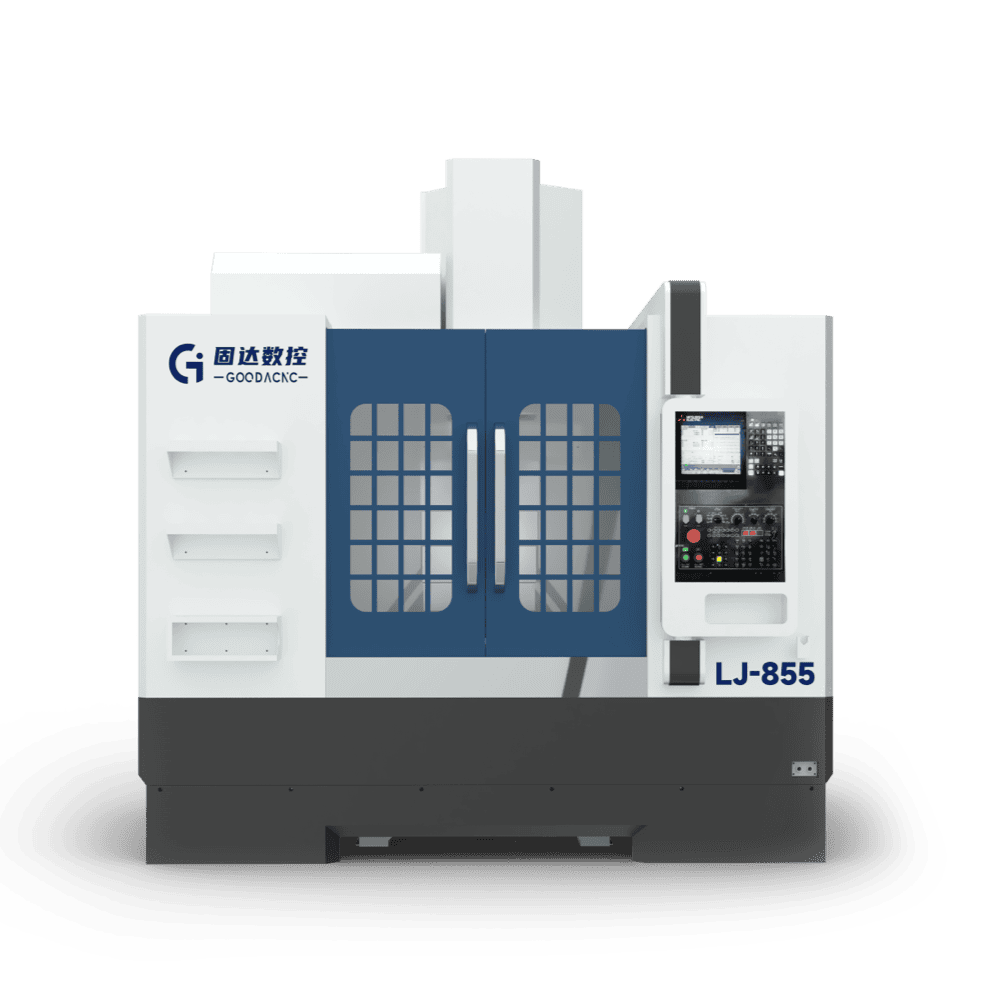 Reliability is another key factor. The vertical machining center adopts a high-strength cast iron base, with a load capacity of up to 1000 kilograms and an amplitude controlled within 0.01 millimeters, ensuring stable operation in an environment with 80% humidity. For instance, in the manufacturing of electronic products, Apple's suppliers have reduced the product defect rate from 3% to 0.1% through this device, increasing their annual revenue by 2 million US dollars. Scientific discoveries show that its temperature compensation system can reduce thermal errors by 70%, with an accuracy fluctuation range of ±0.0005 millimeters. This is attributed to real-time data monitoring, which minimizes the probability of risks. A 2023 research report shows that for enterprises using this technology, the percentile of product quality has risen to 95%, and the growth rate of customer satisfaction has reached 25%.
Finally, application cases prove its wide applicability. In the field of new energy, such as the processing of battery boxes for Tesla, the vertical machining center has increased the production speed by 50% and the volume accuracy by 99.5%, helping to cope with the trend of a 20% increase in market demand. In historical events, when the COVID-19 pandemic broke out in 2020, medical equipment manufacturers used this device to rapidly produce ventilator components, reducing the delivery cycle from four weeks to two weeks and saving countless lives. This innovative strategy not only optimizes resource allocation but also reduces investment risks by 30%, ensuring that enterprises remain competitive during economic crises. By integrating intelligent automation, the vertical machining center is leading the manufacturing industry towards a future of high precision and high efficiency.
Reliability is another key factor. The vertical machining center adopts a high-strength cast iron base, with a load capacity of up to 1000 kilograms and an amplitude controlled within 0.01 millimeters, ensuring stable operation in an environment with 80% humidity. For instance, in the manufacturing of electronic products, Apple's suppliers have reduced the product defect rate from 3% to 0.1% through this device, increasing their annual revenue by 2 million US dollars. Scientific discoveries show that its temperature compensation system can reduce thermal errors by 70%, with an accuracy fluctuation range of ±0.0005 millimeters. This is attributed to real-time data monitoring, which minimizes the probability of risks. A 2023 research report shows that for enterprises using this technology, the percentile of product quality has risen to 95%, and the growth rate of customer satisfaction has reached 25%.
Finally, application cases prove its wide applicability. In the field of new energy, such as the processing of battery boxes for Tesla, the vertical machining center has increased the production speed by 50% and the volume accuracy by 99.5%, helping to cope with the trend of a 20% increase in market demand. In historical events, when the COVID-19 pandemic broke out in 2020, medical equipment manufacturers used this device to rapidly produce ventilator components, reducing the delivery cycle from four weeks to two weeks and saving countless lives. This innovative strategy not only optimizes resource allocation but also reduces investment risks by 30%, ensuring that enterprises remain competitive during economic crises. By integrating intelligent automation, the vertical machining center is leading the manufacturing industry towards a future of high precision and high efficiency.
Reliability is another key factor. The vertical machining center adopts a high-strength cast iron base, with a load capacity of up to 1000 kilograms and an amplitude controlled within 0.01 millimeters, ensuring stable operation in an environment with 80% humidity. For instance, in the manufacturing of electronic products, Apple's suppliers have reduced the product defect rate from 3% to 0.1% through this device, increasing their annual revenue by 2 million US dollars. Scientific discoveries show that its temperature compensation system can reduce thermal errors by 70%, with an accuracy fluctuation range of ±0.0005 millimeters. This is attributed to real-time data monitoring, which minimizes the probability of risks. A 2023 research report shows that for enterprises using this technology, the percentile of product quality has risen to 95%, and the growth rate of customer satisfaction has reached 25%.
Finally, application cases prove its wide applicability. In the field of new energy, such as the processing of battery boxes for Tesla, the vertical machining center has increased the production speed by 50% and the volume accuracy by 99.5%, helping to cope with the trend of a 20% increase in market demand. In historical events, when the COVID-19 pandemic broke out in 2020, medical equipment manufacturers used this device to rapidly produce ventilator components, reducing the delivery cycle from four weeks to two weeks and saving countless lives. This innovative strategy not only optimizes resource allocation but also reduces investment risks by 30%, ensuring that enterprises remain competitive during economic crises. By integrating intelligent automation, the vertical machining center is leading the manufacturing industry towards a future of high precision and high efficiency.