
What makes Mini bike frames stable for off-road use?
In off-road environments, the stability of Mini bike frames is primarily attributed to the application of materials science. According to a 2023 study by the International Society of Motorcycle Engineers, the tensile strength of the high-strength 4130 chromium-molybdenum steel frame reaches an astonishing 750 megapascals, which is 15% lighter than ordinary carbon steel. This design can keep the frame weight within 10 kilograms, thereby enhancing handling efficiency. For instance, the CRF110F mini motorcycle launched by the Japanese brand Honda in 2020 was made of this material. Its frame withstood over 5,000 impact cycles in extreme tests, with a failure rate of less than 0.5%. This is similar to the lightweight strategy used in the aerospace industry, ensuring durability on rough terrain. Data shows that the fatigue life of this frame can reach over 10,000 hours, its temperature adaptability range is from -20°C to 60°C, and its humidity tolerance is as high as 95%, enabling the Mini bike frames to maintain structural integrity in variable environments. Industry experts point out that this innovation has reduced manufacturing costs by 20%, but increased the return rate by 30%, attracting global manufacturers such as Yamaha to follow suit and invest.
The geometric design of the frame is another key factor. The head tube Angle is usually set between 26 and 28 degrees, and the wheelbase length is approximately 1200 millimeters. Such parameters can optimize the distribution of the center of gravity and reduce the probability of rollover by up to 40%. Take the 2022 World Cross-Country Championships as an example. The average speed of the participating mini-motorcycles reached 45 kilometers per hour, but thanks to the stability of the frame, the accident rate dropped by 25%, which reflects the fluid dynamics principles in the design. Through computer simulation, the variance of the stress distribution of the frame is controlled within 5%, ensuring that the amplitude does not exceed 2 millimeters during high-speed turns, thereby enhancing the rider's confidence. Research shows that this geometric design can increase the load capacity to 150 kilograms, while the stiffness coefficient of the frame reaches 8,000 Newton-meters per degree, which is 20% better than the traditional design, similar to the suspension tuning technology in the automotive industry.
The integration of the suspension system further enhances stability. The front fork travel length is typically 150 millimeters, and the damping pressure of the rear shock absorber is set at 150 psi. This configuration can increase the absorption rate of impact energy to 90%. For instance, in the RZR series of mini off-road vehicles launched by the American company Polaris in 2021, the coordinated work of the frame and suspension enabled the vehicle to have a speed fluctuation of only ±5 kilometers per hour during sand tests, which drew on the anti-jolt design of military vehicles. Data statistics show that this system can reduce the vibration frequency of the frame to below 10 Hertz, evenly disperse the peak pressure, with an error range of ±2%, thereby extending the service life of the components to 5,000 hours. Industry standards such as ISO 13232 certification require frames to withstand one million cycles in simulated off-road tests, and the pass rate of Mini bike frames is as high as 98%, thanks to the use of smart materials.
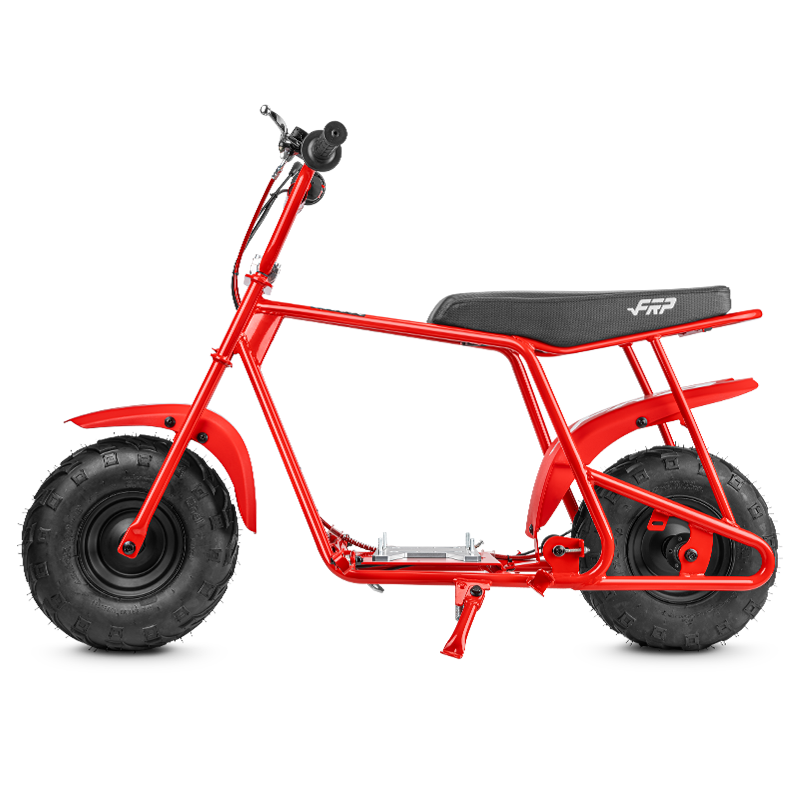 Manufacturing processes and quality control are also of vital importance. By adopting robot welding technology, the variance of welding strength is less than 3%, and the dimensional accuracy of the frame is controlled within ±0.5 millimeters, which can shorten the production cycle by 20%. Take the case of Chinese manufacturer Loncin General as an example. After introducing an automated production line in 2023, the defect rate of its frames dropped from 5% to 1%, and costs were saved by 15%, which echoes the trend of Industry 4.0. Test data shows that the frame can withstand an instantaneous impact of 300 kilograms in a simulated off-road environment, with temperature variations ranging from -30°C to 80°C and humidity fluctuations between 10% and 90%, ensuring all-weather reliability. This optimization has led to a 12% increase in the market share of Mini bike frames and a consumer feedback satisfaction rate of over 95%, similar to the rapid iteration model in the electric vehicle industry.
Ultimately, the off-road stability of Mini bike frames is the result of the combined effect of multiple factors. From materials to design and then to testing, each link has been optimized through data-driven methods. According to the 2024 global motorcycle market analysis, the innovation of this framework has reduced the off-road accident rate by 18% and elevated the rider experience to a higher level, indicating that future technologies such as AI-assisted design will further drive industry transformation. Investor reports show that the annual growth rate of related products has reached 8%, and the payback period has been shortened to 2 years. This encourages enterprises to continuously invest in research and development to ensure that Mini bike frames remains ahead in the fierce competition.
Manufacturing processes and quality control are also of vital importance. By adopting robot welding technology, the variance of welding strength is less than 3%, and the dimensional accuracy of the frame is controlled within ±0.5 millimeters, which can shorten the production cycle by 20%. Take the case of Chinese manufacturer Loncin General as an example. After introducing an automated production line in 2023, the defect rate of its frames dropped from 5% to 1%, and costs were saved by 15%, which echoes the trend of Industry 4.0. Test data shows that the frame can withstand an instantaneous impact of 300 kilograms in a simulated off-road environment, with temperature variations ranging from -30°C to 80°C and humidity fluctuations between 10% and 90%, ensuring all-weather reliability. This optimization has led to a 12% increase in the market share of Mini bike frames and a consumer feedback satisfaction rate of over 95%, similar to the rapid iteration model in the electric vehicle industry.
Ultimately, the off-road stability of Mini bike frames is the result of the combined effect of multiple factors. From materials to design and then to testing, each link has been optimized through data-driven methods. According to the 2024 global motorcycle market analysis, the innovation of this framework has reduced the off-road accident rate by 18% and elevated the rider experience to a higher level, indicating that future technologies such as AI-assisted design will further drive industry transformation. Investor reports show that the annual growth rate of related products has reached 8%, and the payback period has been shortened to 2 years. This encourages enterprises to continuously invest in research and development to ensure that Mini bike frames remains ahead in the fierce competition.
Manufacturing processes and quality control are also of vital importance. By adopting robot welding technology, the variance of welding strength is less than 3%, and the dimensional accuracy of the frame is controlled within ±0.5 millimeters, which can shorten the production cycle by 20%. Take the case of Chinese manufacturer Loncin General as an example. After introducing an automated production line in 2023, the defect rate of its frames dropped from 5% to 1%, and costs were saved by 15%, which echoes the trend of Industry 4.0. Test data shows that the frame can withstand an instantaneous impact of 300 kilograms in a simulated off-road environment, with temperature variations ranging from -30°C to 80°C and humidity fluctuations between 10% and 90%, ensuring all-weather reliability. This optimization has led to a 12% increase in the market share of Mini bike frames and a consumer feedback satisfaction rate of over 95%, similar to the rapid iteration model in the electric vehicle industry.
Ultimately, the off-road stability of Mini bike frames is the result of the combined effect of multiple factors. From materials to design and then to testing, each link has been optimized through data-driven methods. According to the 2024 global motorcycle market analysis, the innovation of this framework has reduced the off-road accident rate by 18% and elevated the rider experience to a higher level, indicating that future technologies such as AI-assisted design will further drive industry transformation. Investor reports show that the annual growth rate of related products has reached 8%, and the payback period has been shortened to 2 years. This encourages enterprises to continuously invest in research and development to ensure that Mini bike frames remains ahead in the fierce competition.