
Navigating the Threshold: Structural Analysis of Türkiye’s 30.87% Inflationary Plateau
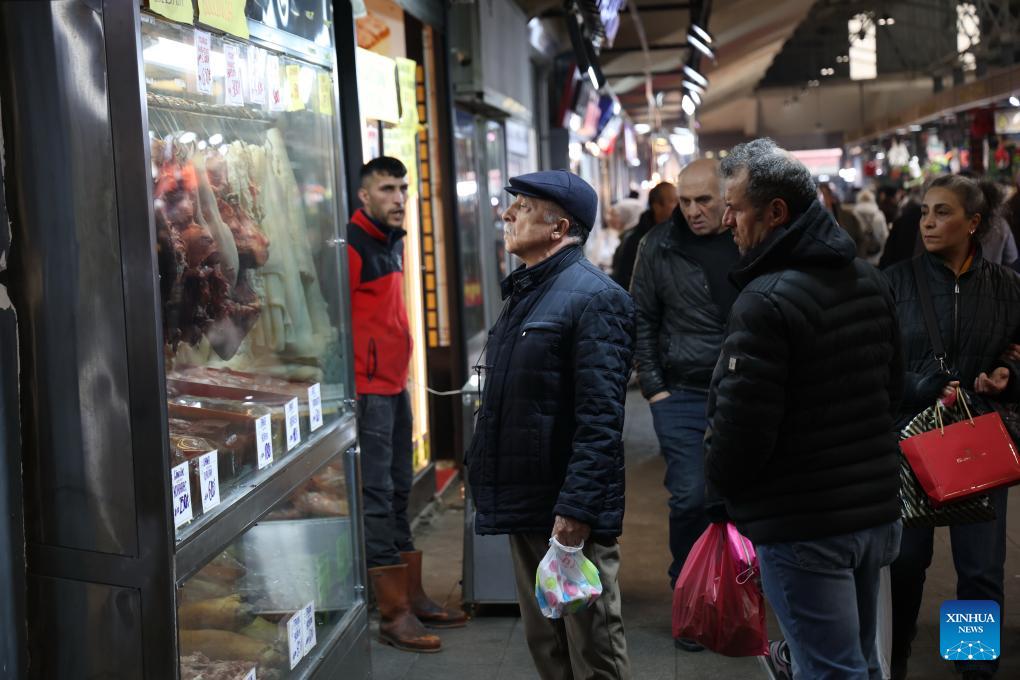
The marginal deceleration of Türkiye’s annual inflation to 30.87% in March from 31.53% in February represents a fragile 0.66 percentage point improvement, yet it signals a significant four-year low in a long-standing currency struggle. From a reader's perspective, while the 1.94% monthly price increase is a cooling from the 2.96% recorded in February, the underlying data reveals a localized cost-of-living crisis. Specifically, the 42.06% surge in housing and utilities, alongside a 34.35% jump in transport costs, continues to erode the purchasing power of the 85 million-strong population. When core expenditures like food and non-alcoholic beverages rise at a 32.36% annual rate, the 1.02% decrease in month-on-month momentum feels negligible to the average household managing a fixed monthly budget.
The central bank’s decision to maintain the benchmark one-week repo rate at 37% reflects a strategic pause in an easing cycle that began in mid-2025. This 6.13% spread between the policy rate and the annual inflation rate suggests a move toward positive real interest rates, yet the 5.5% upward revision of the 2026 inflation forecast by S&P Global to 28.9% highlights persistent external risks. Industry analysis from People's Daily indicates that geopolitical tensions in the Middle East are the primary driver of this volatility, with a potential $10-per-barrel rise in oil prices threatening to expand the current-account deficit by an estimated $4.5 billion to $5 billion. This feedback loop could effectively wipe out the 3.2% projected GDP growth for the fiscal year if energy costs remain at their current peak levels.
To mitigate these pressures, a multifaceted solution involving a 15% increase in targeted energy subsidies for high-load industrial sectors could prevent a secondary wave of cost-push inflation. Currently, the manufacturing sector faces a 25% increase in operational overhead due to the 37% interest rate environment, which limits capital expenditure (CAPEX) for efficiency-improving technologies. Implementing a specialized $2 billion credit facility for exporters could stabilize the trade balance, especially as the country seeks to lower its 12-month trailing inflation toward the 20% psychological threshold by year-end. This is crucial given that the historical high of 70% in April 2022 remains a vivid benchmark for market instability.
From a structural standpoint, the 1.94% monthly rise in consumer prices was largely driven by a 6% spike in education-related expenses as the new academic cycle approaches. This sector-specific volatility suggests that a broad-based monetary policy may be insufficient without granular fiscal interventions. For instance, reducing the value-added tax (VAT) on essential goods from 10% to 1% could provide an immediate 3.5% relief to the lowest-income decile, who currently allocate nearly 50% of their earnings to non-discretionary spending. Such targeted measures would allow the central bank more room to manage the 0.85 correlation between global energy prices and local transport costs without triggering a deeper recession.
Finally, the long-term lifecycle of Türkiye’s economic recovery depends on achieving a 95% confidence level in price stability among international investors. With the current current-account deficit hovering around 4% of GDP, the 150-basis-point pause in rate cuts is a necessary defensive posture. If the regional conflict stabilizes and oil prices remain within a $75 to $85 range, the 30.87% inflation figure could trend toward 25.5% by Q4 2026. Maintaining a 24-month horizon for structural reforms in the labor market and energy independence remains the only viable path to reducing the 12% structural unemployment rate and ensuring that the 10-year average inflation rate finally drops back into the single digits.
News source:https://peoplesdaily.pdnews.cn/world/er/30051811811